

Imagine needing to manage your business’s Instagram account while on a business trip. You log in from your hotel, and suddenly—you’re locked out. Instagram flags the login as “suspicious activity” and demands you verify your identity, interrupting your workflow completely. Choose the best proxies for scraping.
This frustrating experience isn’t a glitch. Every device connected to the internet has a digital address, known as an IP address, which reveals its general location. When you connect from a new place like a hotel or coffee shop, that address changes, making you appear to be someone new.
To platforms like Instagram or even your online bank, a login from an unfamiliar city can look like a security threat. In practice, these services will often block the login to protect the account, even though it’s really you. This is why maintaining a consistent online identity has become so important for anyone working remotely.
A stable digital address becomes a powerful tool in this context. While many tools for anonymous browsing give you a new identity each time, an ISP proxy provides a digital address that never changes, ensuring websites always recognize you as the legitimate owner.
Your Digital ‘Personal Shopper’: What is a Proxy?
Imagine you want to buy a limited-edition item from a store in another city. Instead of going yourself, you could ask a friend who lives there to buy it for you and mail it over. In this scenario, your friend is acting as your helpful middleman, or your “proxy.”
An internet proxy server works in the same way. It’s an intermediary computer that you send your web requests to first. When you want to visit a website, your request goes to the proxy, which then forwards it to the website on your behalf. It’s a simple, but powerful, digital go-between.
The magic happens because the website you’re visiting never sees your device’s real digital address (your IP). It only sees the IP address of the proxy server. This means if the proxy server is located in Germany, any website you visit will think you are connecting from Germany. This principle behind more anonymous browsing shields your true location.
A proxy is a tool that lets you borrow a different digital address. While a full guide to configuring a fixed IP proxy is a deeper topic, the basic idea is that you are choosing a specific location to appear from. However, not all proxies are created equal. Just as a store might trust a delivery to a real home more than to a random P.O. Box, websites treat different types of IP addresses with different levels of trust.
The ‘Real Home’ vs. The ‘P.O. Box’: Why Websites Trust Some IPs More
Think back to our “personal shopper” analogy. If your shopper used a massive, commercial mail-forwarding address to place an order, the exclusive store might get suspicious. But if they used their real home address, the purchase would seem perfectly normal. The internet works the same way with IP addresses. Some come from huge, server-filled warehouses, while others come from actual homes.
Many common proxies use IP addresses from these commercial data centers. Websites are very good at identifying them because they know these addresses don’t belong to a person sitting on their couch, but to a server in a rack. Since these IPs are often used for high-volume, automated activity, websites frequently block them or present them with extra security checks, like endless “I’m not a robot” puzzles. This is a common reason why a free or cheap proxy might not work for accessing a sensitive website.
This is where residential proxies make all the difference. Instead of using an IP from a commercial server, they route your traffic through an IP address assigned by an Internet Service Provider (like Comcast, Verizon, or AT&T) to a real home. To the website you’re visiting, your activity looks completely genuine—just like someone else browsing from their living room. This is the secret to how to avoid proxy detection; you’re blending in with regular internet traffic, not standing out with a commercial IP.
The choice between these proxies comes down to trust. Using a commercial IP is like showing up with a business card from a known bulk-mailing company, while a residential IP is like having a local, verified home address. For tasks that require a website to trust you—like managing an account or making a purchase—the residential option is far more reliable. But what if you need that trusted address to be the same every time you connect?
Should Your ‘Digital Address’ Change? Static vs. Rotating Explained
When you use a residential proxy, you face a key choice: do you want the same digital address every time, or a new one for each task? The answer depends entirely on your goal, because not all trusted addresses need to behave the same way. This is the core difference in the world of static vs rotating residential proxies.
Imagine you need a friend in another city to receive a monthly subscription box for you. You would want them to live at the same, stable address so the package arrives reliably every month. This is exactly how a static residential proxy works. “Static” simply means unchanging. It provides you with one single, consistent residential IP address that you can use for days, weeks, or even months. This builds a recognizable history with any website you visit.
The alternative is a rotating proxy. Think of this as asking a different friend to run each errand for you. A rotating, or dynamic, proxy gives you a new residential IP address frequently—sometimes for every single request you make. This approach is ideal for tasks where you need to appear as many different, unique visitors, like quickly gathering public information or comparing prices across multiple websites without being tracked.
For tasks that depend on trust and history, the choice is clear. If you’re managing a business’s social media account, accessing a personal banking portal, or working with any platform that values a consistent identity, you need a fixed address. The constant change of a rotating proxy can trigger security alerts, whereas the stability of a static IP signals normal, trustworthy behavior. This stability is one of the biggest benefits of a fixed residential IP.
Your Digital Passport: What Exactly is a Static Residential Proxy?
When you combine a helpful middleman, a real home address, and a promise that it won’t change, you get a static residential proxy. It’s a “proxy” that makes requests for you, from a “residential” IP address that websites trust, which is “static” so it remains the same every time you use it. This powerful combination gives you a single, stable, and highly credible online identity tied to a specific location.
The magic of this tool comes down to trust. Because the IP address originates from a real home internet connection—often called an ISP proxy—it has an excellent residential IP address reputation. Websites are designed to welcome traffic from home users, seeing it as legitimate and normal. This is the complete opposite of how they often view connections from commercial data centers, which can be flagged as suspicious. You aren’t just borrowing an address; you’re borrowing one with a built-in history of being trustworthy.
Using static residential proxies is the best way to handle online tasks that demand stability and a consistent identity. This simple tool is the key to avoiding frustrating security blocks and maintaining access to your important accounts.
Use Case 1: Manage Your Business’s Social Media Without Fear
Imagine you run a small business or manage a client’s social media account. You log in from a coffee shop, then from home, and later from a hotel during a business trip. Suddenly, you’re locked out. To platforms like Instagram or Facebook, these rapid location changes look like a classic sign of a hacker trying to take over the account, triggering an immediate security lockdown. This common frustration can derail your entire workflow.
Geo-targeting with a stable IP becomes your secret weapon here. By using a static residential proxy, you can choose a permanent IP address in the same city or country as your business. If your client is in London, you can use a London-based proxy. Now, every time you log in—whether you’re physically in New York or Bali—the social media platform only sees a login from a trusted residential address in London. It looks completely normal.
Using a dedicated residential IP for social media is all about maintaining a consistent online identity. Instead of presenting a different “digital passport” every day, you show the same one every time. This consistency builds a history of trust with the platform, drastically reducing the chances of your account being flagged for suspicious activity. You are no longer seen as a potential threat, but as a reliable user logging in from a familiar place.
You can manage accounts from anywhere with confidence and peace of mind. Your location no longer dictates your access. And just as your location affects how websites perceive your trustworthiness, it can also determine the prices they show you.
Use Case 2: See What Prices Locals Really Pay for Flights and Hotels
Have you ever searched for a flight, checked back an hour later from a different device, and found the price has mysteriously jumped? It’s not always a coincidence or just a matter of availability. Online stores, and especially travel sites, often use your IP address to determine your location and then show you prices adjusted for your region—a practice known as price discrimination.
This means a person searching for a hotel room from a wealthy country might see a higher rate than someone searching for the same room from a location with a lower average income. The website makes an automated guess about what you’re willing to pay based on where you are. As a result, you might be overpaying without even knowing it.
Using a static residential proxy completely changes this dynamic. This is another powerful form of geo-targeting with a stable IP, but this time, the goal is savings. By connecting through a proxy in another country, you can make it appear as though you are shopping from that location. Suddenly, the booking site shows you the prices intended for locals, which can often be significantly lower.
This simple technique can lead to substantial savings on flights, hotels, car rentals, and even digital goods like software that have regional pricing. This money-saving potential is a key reason many savvy shoppers buy proxies. But while a consistent IP is great for building trust and finding local deals, there are times when you need the opposite approach.
The Core Showdown: When to Choose Static vs. Rotating Residential Proxies
You have two powerful tools at your disposal: a stable, unchanging IP address (static) and one that changes with every action (rotating). Deciding between them comes down to one simple question: do you need to build a consistent relationship with one website, or do you need to perform many separate, unrelated tasks? This choice between static vs. rotating residential proxies is like deciding between having a single, trusted key card for a building versus a stack of disposable, single-use tickets.
A static proxy is your permanent key card. You should choose it for any task that requires a consistent digital identity. The main benefits of a fixed residential IP are the trust and stability it builds with a website’s security system. This is perfect for managing a business’s social media account or safely accessing your online banking from another country. The website sees you logging in from the same trusted “address” every time, which prevents frustrating security lockouts.
Rotating proxies, on the other hand, are your single-use tickets. They are ideal for high-volume tasks where you want a fresh identity for each request. Think about comparing prices across ten different flight websites or gathering public search results from various cities. Since you aren’t logging in or building a relationship, a new IP for each action prevents sites from tracking your activity pattern and influencing what you see.
Your goal determines the right tool. Here’s a quick guide:
- Use a STATIC Proxy for:
- Managing one account (social, business)
- Staying logged into a single site
- Building trust for long-term access
- Use a ROTATING Proxy for:
- Checking prices on many sites quickly
- Gathering public information
- Any task where you don’t need to log in
But even with the right proxy, you can still run into trouble if you’re not careful.
Why Do Websites Block You? The Three Main Triggers to Avoid
Even with the best proxy, you might still encounter a dreaded “Access Denied” message or an endless loop of CAPTCHAs. Websites are constantly on guard for suspicious behavior, and they primarily look for three red flags. Understanding these triggers is the key to avoiding proxy detection and maintaining smooth access.
The first and most common trigger is your IP address’s reputation. Most websites maintain a blacklist of IPs known to come from commercial data centers—the kind used by many free or cheap proxy services. Think of it like a bouncer at a club who recognizes a fake ID. When you use a residential IP address, you’re presenting a “real” ID that belongs to a home internet connection, which security systems inherently trust more.
Beyond the type of address, websites also watch for sudden, impossible jumps in location. If you log into an account from a New York IP address and then, five minutes later, try to access it from a Tokyo IP, the system will instantly flag it as a potential account takeover. This is why using a static proxy is so crucial for account management; it keeps your digital location consistent and believable.
Your activity itself can also raise alarms. A normal person can’t click 500 links per minute or add 100 items to a shopping cart in ten seconds. When a website detects this kind of superhuman speed, it assumes a bot is at work and will often issue a temporary block. A static residential proxy makes you look like a legitimate user, but you still need to act like one. This combination of a trusted, stable identity is precisely what keeps you under the radar.
“ISP Proxy”: Is It the Same as a Static Residential Proxy?
You will almost certainly come across the term “ISP proxy.” It’s just another name for a static residential proxy. The acronym “ISP” stands for Internet Service Provider—the company that provides your home internet, like Comcast, Verizon, or AT&T. This name simply emphasizes that the IP address comes directly from a legitimate, consumer-facing internet provider.
Providers use this term to highlight the proxy’s premium quality. When you’re weighing an ISP proxy vs datacenter proxy, the “ISP” label serves as a promise. It confirms the IP address isn’t from a massive, easily-flagged server farm but is assigned to a real residential location, making it appear completely normal to websites. It’s the difference between showing a real driver’s license versus a novelty ID card.
what is an ISP proxy boils down to a mark of authenticity. The best residential IP providers use this phrasing to signal that their proxies offer the highest level of stability and trust for sensitive tasks. This level of legitimacy often leads to a natural question: Are they legal to use?
Are Static Residential Proxies Legal to Use?
This is a perfectly valid and common question, and the answer is yes—the technology itself is completely legal. Proxy servers are a fundamental part of the internet’s infrastructure, used for countless legitimate purposes by individuals and businesses every day. The question of legality isn’t about the tool, but how you use it.
It’s helpful to separate the tool from the action. Think of it like a car: owning and driving a car is legal, but using it to break the law is not. Similarly, using a proxy for legitimate activities like managing your business’s social media account or checking prices on a shopping site from a different region is perfectly acceptable. The legality of using a proxy depends entirely on the legality of the action you’re performing.
However, there’s another layer to consider: a website’s own rules, often called its Terms of Service (ToS). While not breaking the law, some forms of anonymous browsing or using a proxy might go against a specific site’s policies. Violating these rules won’t land you in legal trouble, but it could result in your account being flagged or banned. This is the most common risk for everyday users.
For most people looking to buy proxies for tasks like account management or viewing public web pages, the primary concern isn’t breaking the law—it’s simply respecting each website’s rules. As long as your activities are ethical, you are on safe ground.
How to Pick the Right Proxy: 3 Things to Look For
You’ve decided a static residential proxy is the right tool for the job. When you start searching, you might see a confusing jumble of technical terms and pricing models. For most goals, like managing an account or viewing local content, finding the right service comes down to just three simple factors.
Focusing on location, data needs, and available support will help you find the best residential IP providers without getting bogged down in technical details.
To make it simple, use this short checklist when you’re ready to buy proxies:
- 1. Location, Location, Location: Can you get an IP address from the specific city or country required? This is the most important factor. If you need to manage a UK business account, you need a UK-based IP.
- 2. Data Limit (Bandwidth): How much data is included? Video and heavy browsing use more data than simple logins. To avoid surprises, looking for providers with unlimited bandwidth residential IPs is often the easiest, most worry-free option.
- 3. Help & Support: Is there an easy way to contact someone if you get stuck? Good customer support can be a lifesaver, especially when you’re just getting started.
By prioritizing location, data, and support, you can cut through the noise and choose a provider that fits your needs. You don’t have to be an expert to make a smart decision.
A Simple Guide to Setting Up Your First Proxy
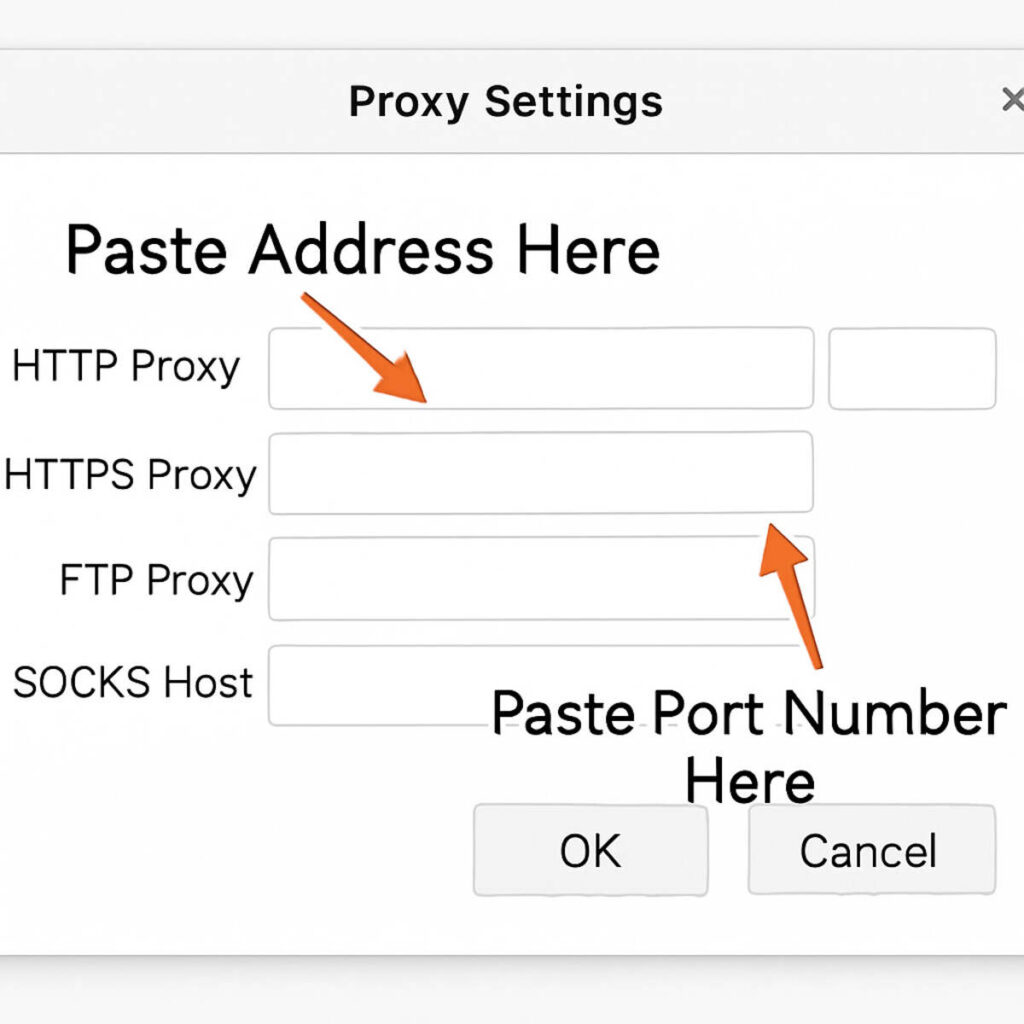
The phrase “proxy setup” might sound like a job for an IT expert, but the reality is refreshingly simple. You don’t need to understand complex network configurations or write a single line of code. If you can copy and paste text and follow basic on-screen instructions, you have all the skills you need to get your new digital address up and running in minutes.
Once you’ve chosen a service, you will receive four key pieces of information: an address (a series of numbers or words), a port number, a username, and a password. Your job is to copy these details from your provider and paste them into your web browser’s network settings. Think of it like being given a secret mailing address and a key to the mailbox; you just have to tell your browser where to go and how to unlock the service.
For an even simpler experience, many providers now offer dedicated browser extensions. This method removes the need to dig into settings at all. After installing the extension from your browser’s app store, you just log in with the username and password provided. From then on, turning your proxy on or off is as easy as clicking a single button in your browser’s toolbar.
This brief guide to configuring a fixed IP proxy shows that the process is designed for everyone, not just tech gurus. Whether you copy the details manually or use a convenient extension, learning how to use a proxy is a quick, straightforward task. It’s the final, simple step to activating your consistent and trustworthy online identity with static residential proxies.
Your New Digital Passport: How to Decide if You Need One
You’ve gone from facing frustrating online blocks to understanding exactly why they happen. What was once a mysterious “suspicious login” warning is now clear: it’s all about your digital address. You now know that static residential proxies provide the benefits of a fixed residential IP, acting as a stable and trusted “digital passport” for navigating the internet.
This knowledge empowers you to decide if this is the right tool for your specific situation. To find out, simply ask yourself these questions.
Do You Need a Static Residential Proxy?
- Do you frequently get locked out of online accounts when you travel or work from different locations?
- Do you need to manage an online account (like social media or banking) that is based in a different country than where you live?
- Do you want to see prices or content as if you were a local in another city or country?
If you answered “yes” to any of these, you are no longer stuck. You now have the understanding needed for solving IP blocks and can choose a solution with confidence. You’ve officially traded digital confusion for control over your online identity.
